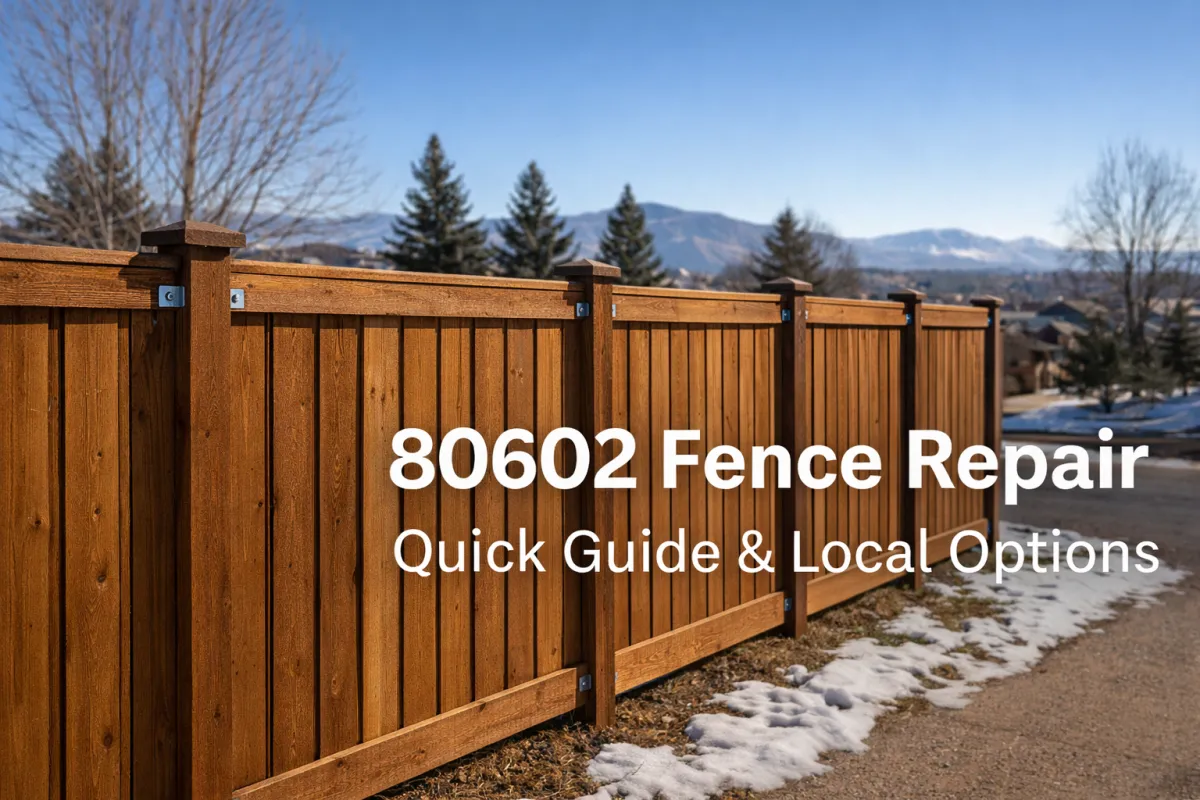
80602 Fence Repair | Quick Guide & Local Options
Fence repair in the 80602 ZIP code requires a different approach than in many other parts of the country. Located in northern Colorado, the 80602 area experiences strong sun exposure, dry air, seasonal wind, and repeated freeze–thaw cycles—all of which place long-term stress on fencing materials and structural components.
This guide explores common fence repair needs in the 80602 area, how Colorado’s climate contributes to fence damage, and what homeowners should consider when researching local fence repair options.
Why Fence Repair Is Common in the 80602 Area
Fences in northern Colorado often deteriorate due to environmental stress rather than age alone. In the 80602 region, several factors consistently contribute to repair needs:
High UV Exposure
Colorado’s elevation increases ultraviolet radiation, which accelerates fading, drying, and surface breakdown—especially in wood and vinyl fencing.
Freeze–Thaw Soil Movement
Temperature swings during fall, winter, and spring cause soil expansion and contraction. This movement can loosen posts, shift fence lines, and weaken footings over time.
Dry Climate
Low humidity affects moisture balance in wood, leading to shrinkage, cracking, and splitting if materials are not well suited to Colorado conditions.
Wind Exposure
Open areas and developing neighborhoods near 80602 can experience sustained wind, which places lateral pressure on panels, rails, and posts.
Because of these conditions, fence repair in 80602 often focuses on structural stability rather than cosmetic damage alone.
Common Fence Repair Issues in 80602
Leaning or Shifting Fence Posts
One of the most frequent repair needs in northern Colorado. Soil movement and frost heave can destabilize posts if depth, drainage, or footing design was insufficient.
Cracked or Warped Wood Panels
Wood fencing exposed to dry air and intense sun may crack or warp, especially if not sealed or if lower-grade lumber was used.
Loose Rails and Fasteners
Wind stress can loosen rails, brackets, and fasteners over time, reducing overall fence rigidity.
Gate Misalignment
Soil movement and post shifting often affect gates first, causing sagging, dragging, or difficulty closing properly.
UV-Related Surface Degradation
Vinyl and composite fences may show surface chalking or fading after prolonged sun exposure if UV stabilization is inadequate.
Fence Types Commonly Repaired in 80602
Cedar and Wood Fencing
Repairs often involve post stabilization, panel replacement, or addressing shrinkage and cracking caused by dry air.
Vinyl Fencing
Vinyl repairs may focus on reinforced rails, damaged panels, or correcting movement caused by shifting posts.
Composite Fencing
Composite systems are generally stable, but repairs may address structural framing or fasteners rather than the panels themselves.
Metal (Steel or Aluminum) Fencing
Repairs typically involve post alignment, fastener replacement, or correcting movement from wind or soil shift.
Split Rail & Open-Style Fencing
Common in areas near open land, these fences often require rail replacement or post resetting due to wind exposure.
What to Look for in Fence Repair Options Near 80602
When researching fence repair in the 80602 area, homeowners benefit from focusing on methodology rather than speed.
Climate-Aware Repair Techniques
Effective repairs account for frost depth, drainage, and expansion—not just surface fixes.
Soil-Specific Solutions
Understanding whether local soil is clay-heavy or mixed helps determine how posts should be reset or reinforced.
Material Compatibility
Replacement components should match existing materials in both performance and environmental tolerance.
Structural Evaluation
A reliable repair approach identifies why the fence failed—not just which part is damaged.
Local Experience
Fence repair providers familiar with northern Colorado conditions are more likely to address underlying causes rather than temporary symptoms.
Preventive Considerations After Fence Repair
Fence repair is also an opportunity to improve long-term performance:
Adjusting post depth or drainage to reduce future movement
Reinforcing wind-exposed sections
Replacing vulnerable components with more climate-resistant alternatives
Realigning gates to account for soil behavior
Applying UV-appropriate finishes where applicable
These steps can extend the life of repaired fencing in the 80602 area.
Why Research Matters for Fence Repair in Colorado
Many fence issues in Colorado recur because repairs focus on appearance rather than environmental forces. In ZIP code 80602, long-lasting fence repair depends on understanding:
Seasonal soil movement
UV exposure levels
Wind patterns
Material behavior in dry climates
A research-based repair strategy helps ensure that fixes remain stable across multiple seasons.
Final Thoughts
Fence repair in the 80602 area is not just a maintenance task—it’s a structural consideration shaped by Colorado’s climate and terrain. By understanding the most common repair issues, material responses, and environmental stressors in northern Colorado, homeowners can make more informed decisions when researching local fence repair options.
A thoughtful, climate-aware approach helps ensure that repaired fences remain functional, aligned, and durable through Colorado’s changing seasons.
